
[NOTE: In Sacramento last week, we finally got to UC Davis to visit its relatively new art museum. I wrote up this review for Art Muse, the LA-based art-tour group I belong to, which is hoping to mount a members’ trip to Northern California. If you’re interested in other such articles and private tours of Californian museums, check out the Art Muse site: https://www.artmusela.com/https://www.artmusela.com/] Here’s what I wrote:
After months of trying, I finally had time enough while visiting Sacramento to get to the University of California at Davis’s Manetti Shrem Museum of Art (known in full as the Jan Shrem and Maria Manetti Shrem Museum of Art). While I had long been aware of UC Davis’s famed art department, founded in the 1960s as a center for “progressively defiant” Californian art, I was unprepared to find this same dynamic spirit alive and well in this very 21st-century institution. The building is new, opened in 2016, the fulfillment of 60 years of hopeful planning by the art department. With funding provided by Napa Valley winemakers Jan Shrem and Maria Manetti, along with an earlier endowment by Margrit Mondavi, widow of Napa Valley eminence Robert Mondavi, their dream became a reality. That the UC system’s main agricultural campus should have its cultural endeavors supported by oenologists seems perfectly appropriate. Architects for the building were Florian Idenburg and Jing Liu of the firm SO-IL of Brooklyn, partnered with local architect Bohlin Cywinski Jackson.
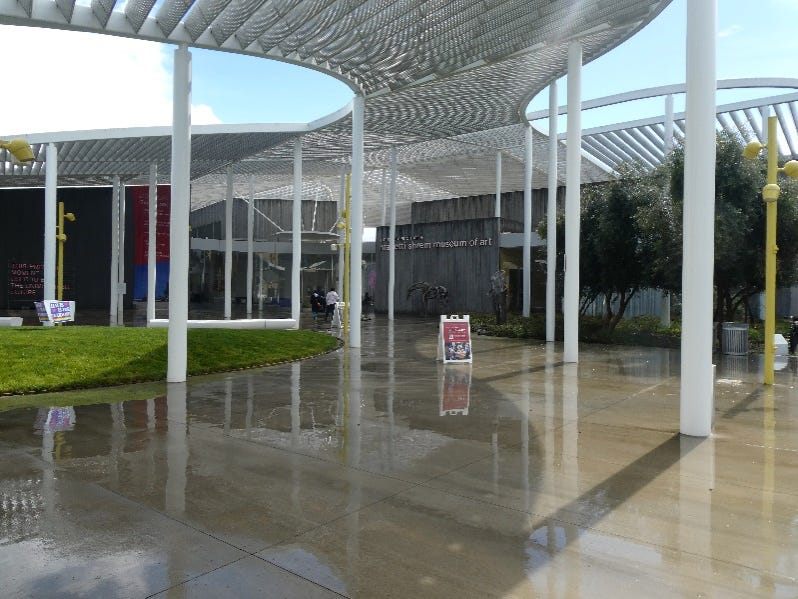
When the Museum opened, the New York Times highlighted the “trailblazing contributions by the school’s renowned art faculty.” Its permanent collections contain some 6,000 works, the majority of which are by UC Davis faculty and graduates. Its exhibitions today continue to focus on alumni and students, with an exuberant emphasis on inclusiveness and contemporary issues. The three exhibitions (and one workshop presentation) I saw were exemplary. The larger galleries displayed the works of Deborah Butterfield, a UC Davis graduate, well known internationally for her many sculptures of horses. As the subtitle of the exhibition “The Nature of Materials” indicates, Butterfield’s equine forms on display demonstrate her fascination with various materials, from mud mixed with straw to driftwood cast in bronze to bits of plastic debris found on the beach. Her most impressive compositions were full-sized and created out of scrap metal, carefully welded to depict Butterfield’s characteristic horse motif. As the informative brochure accompanying the show states, her manipulations of materials “tranforms mundane objects into repositories of deeper meaning.”
Art Muse LA Premium is a reader-supported publication. To receive new posts and support our work, consider becoming a free or paid subscriber.
Subscribed
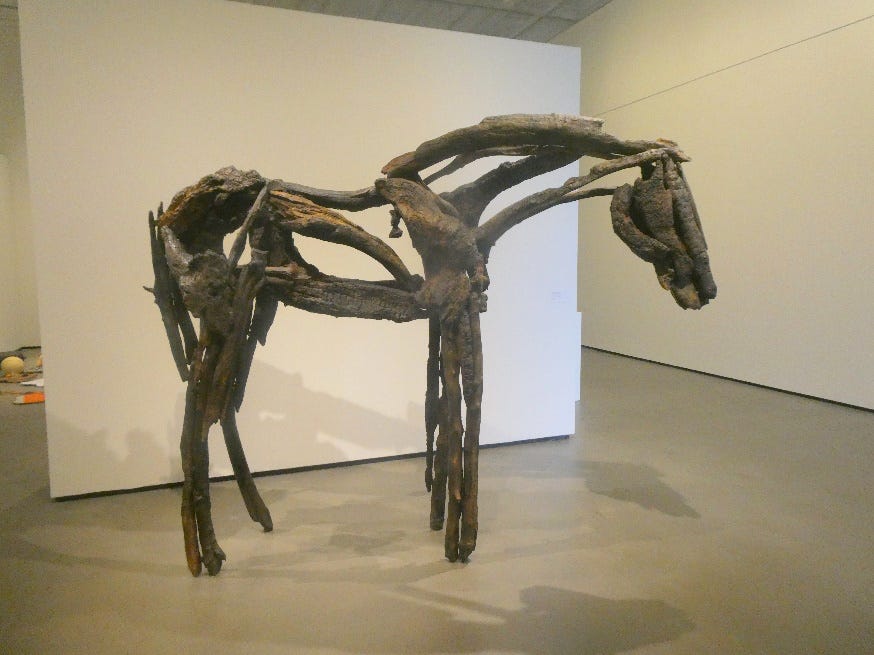
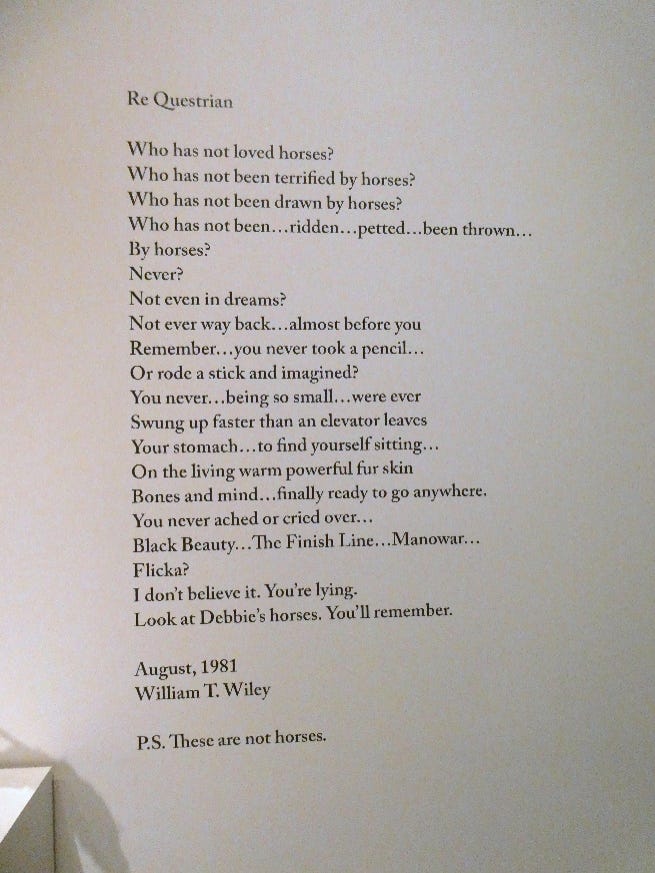
In dialogue with Butterfield’s figures, a side gallery exhibits “Kindred Spirits,” with artworks by her mentors and colleagues at Davis, William T. Wiley, Roy DeForest, Robert Arneson, and Joan Brown. Wiley also contributes a poem as tribute to Butterfield, from which the show acquires another subtitle, “P.S. These are not horses.”
Stimulating as this one exhibit was, other galleries added to the excitement. Chicano activist and printmaker Malaquias Montoya taught at Davis for 20 years, both in Chicano Studies and in the studio art department. His political posters are displayed along with the work of his many students in the show “Malaquias Montoya and the Legacies of a Printed Resistance.” Themes of resistance and commentary on colonization and LGBTQ+ rights are given colorful presentation in these rooms, spanning Montoya’s iconic poster “Yo Soy Chicano” (1972) to the contemporary work of his student Xabi Soto Beleche who identify themselves as “Artista trans, queer, trigueñe” (Trans, queer, brown artist). I was impressed by Montoya’s craftsmanship and his obvious success as a teacher and mentor; his radical activism visualized in print has been handed down to a current generation of activists.

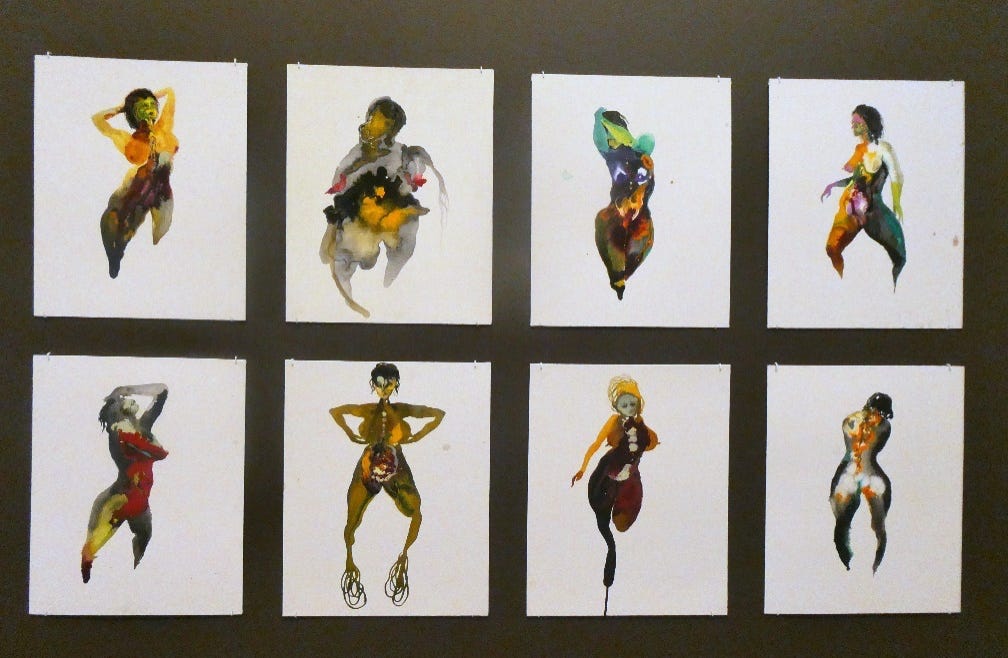
Finally, one smaller gallery presented recent paintings by UC Davis Professor Shiva Ahmadi, as “Strands of Resilience,” her “first mid-career solo museum exhibition on the West Coast,” as the brochure claims. Ahmadi focusses on seemingly lyrical images of the female body, works that combine mythical storytelling with underlying themes of migration, violence, and marginalization. After the bold forms and striking colors of Montoya’s prints, Ahmadi’s luminous watercolors demonstrate how varied art practices can be in addressing contemporary global issues.
I was just about to leave the Museum when I noticed that the workshop room to the side of the foyer featured a display labelled “Pyro Futures.” The glass cases in the room presented scenarios visualizing different approaches to handling California’s worrisome wildfires situation. While requiring a bit of reading and digesting information, the provocative agenda here emphasized prescribed burning and, as the flyer pointed out, the reassertion of Native tribal rights to “cultural burns.” In artistic terms, I was intrigued by the initiative’s inclusion of many cleverly designed postcards addressing the issue of current fire prevention practices, exhorting visitors to choose a new mascot other than Smokey the Bear as the state’s symbol for controlled burns (options include Sooty the Squirrel and Burnie the Bobcat!). This workshop room in the Museum will evidently continue to invite lively interaction with the visitors on other hot-button issues.

Apart from our satisfaction with the sophisticated level of exhibitions, I was also impressed with the Museum’s commitment to diversity in hiring student staff, at least what I could experience of the staff on a rainy Saturday afternoon. All the guides and security guards were students, from an array of ethnic and racial backgrounds, gender expression, and other identities. They were all eager to communicate with visitors, and all were wearing lab coats that they had colored themselves. It has been a while since I’ve been in an art space as lively, provocative, and stimulating as the Shrem. For anyone in the Sacramento area, the Museum is definitely worth a short side trip to the campus of UC Davis.


 esauboeck